Wednesday, October 16, 2019

Pesticides, heavy metals and a healthy diet

Pesticides, heavy metals and a healthy diet

The world today is observing World Food Day with the theme, “Healthy diet for a Zero Hunger world”, This is a worthy fight to pick, particularly for Bangladesh, a country where we are constantly assailed with news of food adulteration and contamination. The mobile court drives that fine fruit sellers and milk producers for selling contaminated products, and restaurant owners for serving unhygienic and inedible food to the customers, are a testament to the low-quality food that we are consuming day in and day out.   
Take, for example, the contaminated milk episode we have experienced recently. In case we need a reminder, a study by Biomedical Research Centre of Dhaka University had found traces of harmful pesticides and antibiotics like ciprofloxacin, azithromycin and levofloxacin that are used to treat bacterial infections in humans, and even lead, in packaged milk of 14 major dairy brands. Following further tests of milk samples—amidst fire and brimstone from various quarters, with a government high-up threatening the lead researcher of the study with consequences and the milk producers “uncovering” foreign conspiracy to tarnish their good names in this chaos—it was found that the 14 brands did indeed contain elements that are harmful for human health. This resulted in the High Court banning production, distribution and sale of pasteurised milk of the said brands for five weeks.        
Within days, in a surprising turn of events, the Supreme Court lifted the High Court ban on the 14 milk brands and things returned to normalcy—for everyone, including the consumers. After the hotchpotch and uncertainty of the preceding weeks, people could finally heave a sigh of relief and go back to their business as usual. The entire milk fiasco was, as this author had written in a previous article, “sacrificed at the altar of the nation’s chronic short attention span.” We are still buying these milk brands from the stores and consuming them with the blissful ignorance of a child—an ignorance that we have chosen over food safety.
Only yesterday, another food adulteration related news made the headlines: high amounts of lead have been found in turmeric powder available in various parts of the country—an indispensable ingredient of Bengali cuisine; a product found in every single Bengali household. The report added that there is no safe consumption level for lead and it is very dangerous for pregnant women and can result in stunted growth of children.
A similar story came into the limelight in 2013, when a reputed local brand of turmeric powder had to recall its products from the local market, because the US’ Food & Drug Administration, the New York Health Department and a private laboratory found excessive amounts of lead (48ppm) in the said turmeric powder brand which had been exported to the US. Later, the brand returned to the market, and was then banned again earlier this year by BSTI followed by a High Court instruction to remove 52 products, which included the turmeric powder brand, for failing quality tests. After retesting though, the ban on the turmeric powder brand was lifted by BSTI, along with two other products.
Incidents like these have become a common scenario in Bangladesh. We have become accustomed to news of this nature, inured to them.
That said, Bangladesh has made great strides in the last few decades in increasing food production. According to government sources, food production has gone up 40.13 million metric tons. The country also ranks 4th in the world as a rice producer. And we stand 3rd in producing fish and vegetables—how safe they are for consumption is an entirely different matter. 
Thus one cannot help but wonder, with adulterated food disdainfully making their way into our tables, how close are we to achieving food security beyond the statistics, and in the real world?
There are certainly gaps in the food value chain. And the problem of contamination starts at as early as the pre-production process, which is why heavy metal elements have been found in cow milk or pesticides used in agriculture and unhealthy chemicals in fresh produce.
According to Prof ABM Faroque, former director of Biomedical Research Centre at the Faculty of Pharmacy, Dhaka University, the heavy metal elements might have found their way into the food chain through the water the cows are made to drink or the low-grade fertilizers we use to grow crops, which contain impure elements. Additionally, the excessive use of pesticide to protect fruits and vegetables from insects can result in contamination, since a portion of the insecticides are absorbed in the produce.
There is an evident lack of coordination between the stakeholders in the food business; the various narratives that have emerged from different food control agencies in the wake of the milk fiasco are a manifestation of this persistent problem. This has resulted in lapses in our food quality control process, leading to the myriad problems we are currently facing.
The government enacted the Food Safety Act 2013 in order to address this issue. The Act aims to facilitate coordination among different food control agencies in order to remove the loopholes in the system.
But six years down the line, how much have we been able to achieve in terms of providing healthy and safe food for the citizens? The questions that have been raised over the quality of food, including milk, turmeric and other consumer products that had to be banned, present an unflattering picture. We have a long way ahead of us in this journey.
The Food Safety Act 2013 needs to be more stringently implemented. All the stakeholders, including the relevant government agencies, private dairy businesses and non-government organisations working in this sector, must take collaborative measures to promote agricultural methods that would yield safer food for the people. At the same time, we have to address problems like water and soil contamination in order to prevent heavy metal elements and pesticides from creeping into our food value chain.
It is time for concrete and effective actions—actions that will ensure healthy food for the people, because as stated by Anna Lartey, Director of Nutrition and Food Systems, Food and Agriculture Organization of the United Nations, “It’s not enough to simply fill people’s stomachs–they must be nourished.”

Tasneem Tayeb is a member of the editorial team at The Daily Star. Her Twitter handle is @TayebTasneem. 

Friday, October 11, 2019

ROHINGYA NEWS UPDATE

                                                   ROHINGYA NEWS  UPDATE

SOURCE-DAILY STAR NEWSPAPER, BANGLADESH

STUDENTS POLITICS- BANGLADESH CHAPTER

                                  STUDENTS POLITICS- BANGLADESH CHAPTER


BUET  student Abrar Fahad’s killing reflects an utter "failure of Bangladesh government" to bring the people responsible for abusing power to justice, Human Rights Watch said 11 OCT 2019.
“A government that ignores torture, enforced disappearances, extrajudicial killings by security forces, and arbitrary arrests over dissent begets a culture where students can run a torture cell on a university campus,” said Brad Adams in a statement.
Bangladesh authorities should ensure a thorough, impartial, and transparent investigation into Abrar Fahad’s murder, and hold all those responsible to account, said Adams, executive director of HRW’s Asia Division.
“This deadly incident is not surprising. The Awami League government has long refused to hold Chhatra League supporters accountable for acts of violence and intimidation,” Adams said.
There are complaints of extortion, threatening false allegations, violent attacks around elections and even acting as vigilante law enforcers during the 2018 student protests, he said.
“Bangladesh should not be a Room 2011,” he said in the statement. (Daily star- Bangladesh newspaper report)
Abrar, a second-year student of Electrical and Electronic Engineering department of Buet, died after he was brutally beaten allegedly by some Chhatra League men at a room of the university’s Sher-e-Bangla Hall.
In the last 3 decades, student politics brought no good for the country, rather it acted as a weapon for ruling political parties.they committed numerous murders, assaults in almost everyday basis, they serve as a wing of political parties in almost all educational institutes, as well as they are related to economic crimes. There is no country in the world which has these kinds of student politics.so it is high time to ban all forms of student politics in Bangladesh. of course, students will think about the country's interest, they will give their valuable opinion on different matters, they will organise rallies, will be active part for good in national and international matters .but student wing of any political parties should be ban forever.it should be remembered that it is 2019 now and world has changed a lot and we are not digging field with cows now, we are using smart technology. if this kind of student politics sustain, many Abrar have to give life every day.

Thursday, October 3, 2019

Teesta water dispute

                                                         Teesta water dispute
The Teesta river dispute makes headlines every time there is a bilateral talk between India and Bangladesh. The dispute is regarding water sharing of River Teesta. Bangladesh wants a higher share than it gets now.

Bangladesh’s stand on Teesta River Dispute

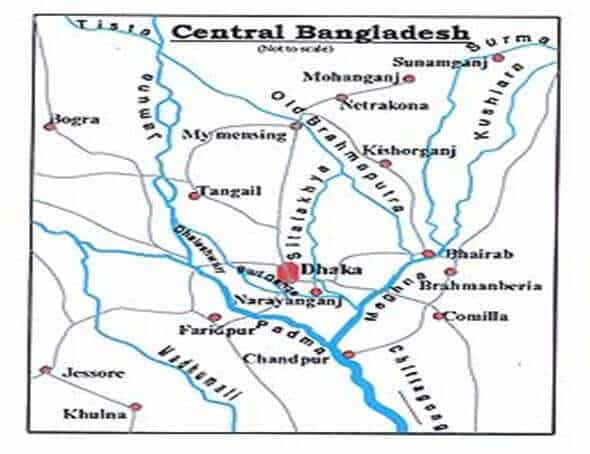
Central Bangladesh

  • India already enjoys a share of 55% of the river water.
  • Bangladesh claims 50% of the water between December and May every year because that’s when the water flow to the country drops drastically.
  • Over 1 lakh hectares of land in Rangpur – its rice bowl cannot be cultivated for winter crops due to excessive withdrawal of water by India.
  • Bangladesh demands a fair share of river waters during the dry season.
  • Conclusion
    • Bangladesh is a significant neighbourhood for India with a shared history, culture, religion and many more common elements.
    • For Bangladesh, this issue is still considered to be a prolonged suffering inflicted by India.
    • The cooperation of Bangladesh is important to India and without such liberal regimes in neighbouring countries, India cannot become terror free.Sheikh Hasina’s Bangladesh Awami League(BAL) party followed India-friendly policies and also adopted a zero tolerance policy against anti-Indian terror outfits and eventually ULFA was banned.
    • Bangladesh is an essential element for India to get connected with North East.
    • Considering the strategic importance of Bangladesh and as a responsible upper riparian state, India needs to take proactive steps for early conclusion of Teesta agreement. otherwise consequences may be bitter.
  • for details-https://www.clearias.com/teesta-river-dispute/

Friday, July 19, 2019

Farakka barrage ,adverse effects on Bangladesh and India

                              Farakka barrage, adverse effects on                                  Bangladesh and India
Farakka Barrage is a barrage across the Ganges River, located in Murshidabad district in the Indian state of West Bengal, roughly 16.5 kilometres (10.3 mi) from the border with Bangladesh near Shibganj. Farakka Barrage Township is located in Farakka (community development block) in Murshidabad district. Construction was started in 1961 and completed in 1975 at a cost of ₹156.49 crore(US$23 million). Operations began on 21 April 1975. The barrage is about 2,240 metres (7,350 ft) long.[1] The Feeder Canal (Farakka)from the barrage to the Bhagirathi-Hooghly River is about 25 miles (40 km) long.

EFFECT ON BIHAR, INDIA

The Nitish Kumar government(BIHAR, INDIA) has held the Farakka barrage in West Bengal responsible for heavy floods in Bihar and asked the Centre to decommission it to desilt the heavily loaded upstream of the Ganga river.
The state has made the recommendation, observing that the dam is the “genesis of severe floods” and responsible for “alarming” silt increase upstream.
‘Severe harm’
The Nitish Kumar dispensation has made the demand before an experts’ committee formed by the Centre to work out guidelines for desilting the Ganga following last year’s devastating floods, sources told PTI.
The Farakka barrage was constructed in the early 60s with the main purpose of helping flush out sediment deposition from Kolkata Port, besides addressing drinking water requirement in West Bengal.
“The barrage is the genesis of severe flood consequences and responsible for progressive silt increase in the upstream of the Ganga between Patna and Bhagalpur (in Bihar),” the state government has told the committee, according to sources.
“Decommissioning the barrage will help automatically desilt the heavily loaded upstream, allowing silt to move to deltas before the sea,” it said.
Such a move, the state has said, will further help in restoration of deltas and its ecosystem, which is also getting adversely affected by this barrage.
To buttress its point, the state government has referred to Kolkata Port Trust’s data, which suggests that silt dredging at the port has increased from 6.40 million cubic metres annually from pre-Farakka days to four times, i.e. at 21.88 MCM annually, during 2003. The dam became operational in 1975.
“So the barrage is of no help... Functioning of the barrage is itself giving rise to flooding,” the state has said in its submission.
‘Threat to aquatic species’
Among others, the government has blamed the barrage also for constricting “severely” movement of habitations and normal cycle of aquatic species, mainly fishes like Ilish (Hilsa) and Chingri.
“Their migration, reproductive cycle and survival have been affected to the extent of being extinct. It also has adverse impact on dolphin sanctuary at Bhagalpur. The number of dolphins there is decreasing, which can be estimated from their frequency of sighting,” the sources said.
The state government has also recommended to the panel to come up with ‘National Silt Policy’ to address the problem. Bihar faced one of its worst floods as the Ganga swelled in August last year, claiming lives of over 20 persons and affecting 20 lakh people.(Published on February 19, 2017,THE HINDU)
 The Ganges Treaty between India and Bangladesh is an agreement to share surface waters at the Farakka Barrage near their mutual border.Yet, the conflicts and crises between India and Bangladesh arising out of this Treaty are not limited to simply reduced flows below 50,000 cusecs. The issue of flooding is of particular concern to Bangladesh. As a deltaic floodplain, Bangladesh already faces even greater risk of flooding than drought. Because the Ganga Treaty allows India to withdraw a maximum of 40,000 cusecs irrespective of the overall flow of the river, when the flow reaches 2,000,000 cusecs – the point at which the river breaches its banks – there is no recourse in the Treaty for flood alleviation. The flood risk is compounded by the rapid rise in silt deposition rates occurring since the Farakka Barrage was erected.


Sunday, July 14, 2019

Annan commission recommendation on rohingya crisis

In September 2016, following a request from Daw Aung San Suu Kyi, the State Counsellor of Myanmar, the Kofi Annan Foundation and the Office of the State Counsellor established an Advisory Commission on Rakhine State. The Commission is a national entity and the majority of its members are from Myanmar. It was mandated to examine the complex challenges facing Rakhine State and to propose responses to those challenges. 
here the 88 recommendations of  the commission :


Saturday, July 13, 2019

DEMOCRACY VS DEVELOPMENT,WHICH ONE BANGLADESH SHOULD PREFER?

DEMOCRACY VS DEVELOPMENT, WHICH ONE BANGLADESH SHOULD PREFER?


SHEIKH HASINA IS NOW LEADING THE BANGLADESH, OF COURSE, SHE IS A CAPABLE LEADER, BUT WHAT WILL HAPPEN IN HER ABSENCE? ONCE ONE COUNTRY CAME OUT FROM DEMOCRATIC TRADITION, IT IS VERY HARD TO GO BACK TO DEMOCRACY AGAIN, EXAMPLE-EGYPT, SYRIA, MANY AFRICAN COUNTRIES. IN MODERN COUNTRIES IT IS MORE IMPORTANT TO BUILD UP INSTITUTION. RULERS COMES AND GO. BUT ONCE INSTITUTIONS ARE BUILD UP AND FUNCTIONS PROPERLY IN A COUNTRY IT ATTAINS ABILITY TO GO FAR. OTHERWISE ONCE UPON A TIME, IT WILL FACE MISERABLE DESTINY.

FOR NOW, NO INSTITUTION ARE WORKING PROPERLY IN BANGLADESH ACCORDING TO CRITICS, THE LAST ELECTION WAS NOT ACCEPTED INTERNATIONALLY. A LOT OF  COMPLAINTS AGAINST ADMINISTRATION & JUDICIARY. BANKS  AND STOCK EXCHANGES ARE IN CHAOS.

SOME MEGA PROJECTS ARE RUNNING ACROSS THE COUNTRY. BUT NO DEVELOPMENT WILL ULTIMATE SUSTAIN WITHOUT DEMOCRACY. WANNA SEE EXAMPLE? SEE EGYPT,  SYRIA, LIBYA, IRAQ. ONCE UPON A TIME, THEY MADE STRONG INFRASTRUCTURE BUT ULTIMATELY NOTHING HELPED IN THE LONG RUN DUE TO LACK OF DEMOCRACY.

SO BANGLADESH HAVE TO  DECIDE AT LEAST, TO DO A CREDIBLE AND ACCEPTABLE ELECTION EVERY FIVE YEARS, WHICH WILL BE BELIEVED BY ITS OWN PEOPLE. THIS WILL BE FIRST STEP TO INSTITUTION BUILD UP.

IT'S ALSO IMPORTANT TO REALISE THAT MONEY CAN'T BRING EVERYTHING. IF YOU CALCULATE EVERYTHING BY MEASURING GDP, IT WILL GIVE A FALSE PICTURE.FREEDOM, DIGNITY, RULE OF LAW, REDUCING INCOME DISPARITY IS FAR MORE IMPORTANT. OTHERWISE, GDP IS A JUST A NUMBER AND NO ACHIEVEMENT  WILL SUSTAIN IN THE LONG RUN. HUGE EXAMPLES ALREADY THERE IN WORLD HISTORY.